10/6/2026 Journal Advocate - Moratorium enacted; Hume property situation
Logan County puts 6-month pause on permits for carbon sequestration facilities
Peetz couple has filed a lawsuit against Tallgrass Energy over CO2 pipeline and compressor station dispute
READ OR LISTEN ON JOURNAL-ADVOCATE.COM
by Callie Jones
The Logan County Commissioners at their Tuesday, Oct. 6 business meeting, imposed a temporary six-month moratorium on the issuance of permits related to the development and operation of carbon sequestration facilities in the county, including but not limited to well fields, pipeline, whether new or pre-existing and proposed for conversion to carbon dioxide transport, and other associated equipment and structures.
Before the commissioners took action three residents spoke in favor of the temporary pause. Greg Neinuser, who voiced concern about companies that possibly want to put more CO2 pipelines in besides the Tallgrass Energy pipeline that already exists, strongly urged the commissioners to do more than a temporary moratorium and instead put something more permanent in place and Peetz Town Manager Ron Gentry applauded the commissioners for the moratorium so they can explore what carbon sequestration is and then take further action.
The commissioners also heard from Brady Hume, who encouraged them to consider setbacks and permitting for sites like this. He and his wife, Kari, have filed a lawsuit against Tallgrass Energy in Logan County District Court related to the company’s gas compressor station and a pipeline that was converted from carrying natural gas to carbon dioxide in 2025.
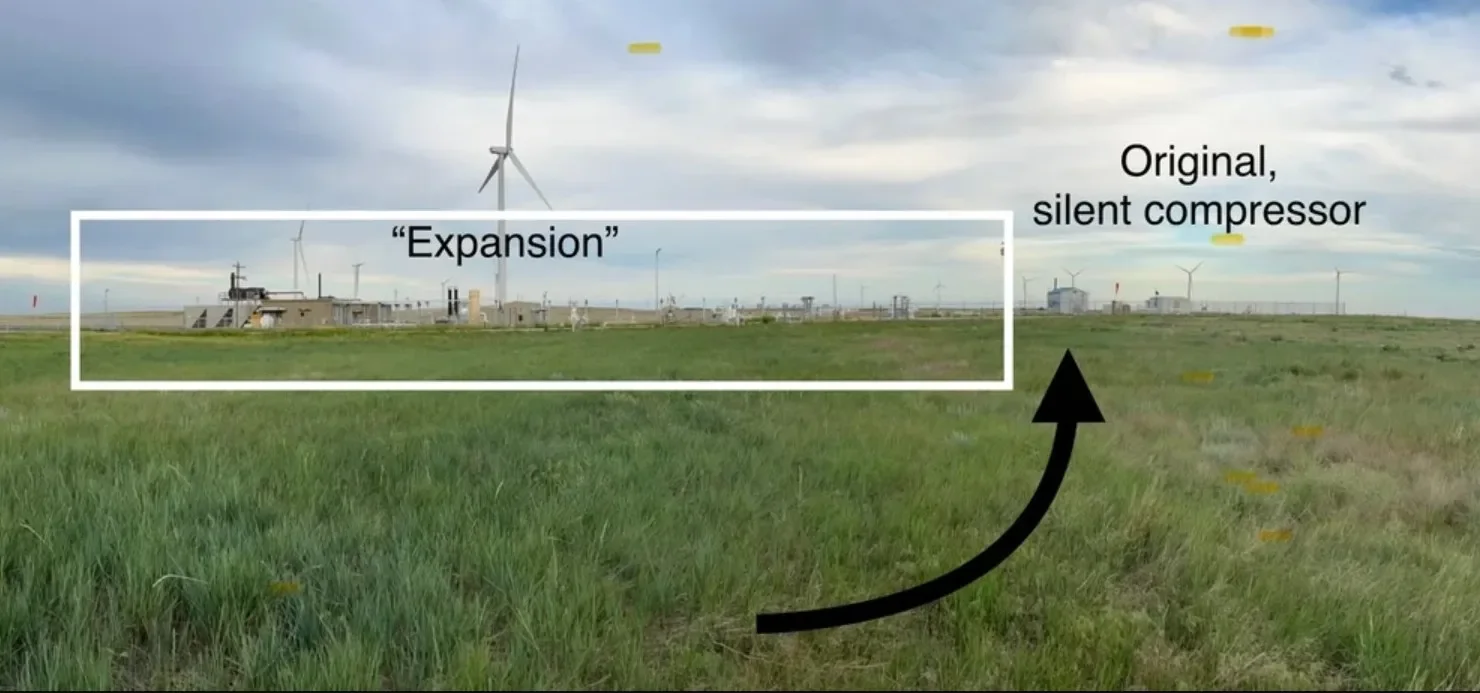
The Humes along with their seven children, live on a farmstead north of Peetz that sits just 951 feet from Tallgrass’ gas compressor station, which they say was built following a zoning change, with no local building permit required, and without the public notice ordinarily provided for a project of its scale. In January 2024, Logan County approved a 2.07-acre subdivision exemption for “the expansion of an existing natural gas compressor station.” From April through September an entire new compressor station was built, next to the old Trailblazer Pipeline compressor, which hasn’t operated since 2018.
The Humes also have three nearby pipelines, the Rockies Express Pipeline built across their pasture and wheat field to transport natural gas, a lateral pipeline, Tallgrass Interstate Gas Transmission, that runs parallel to their land, and 800 feet from their home is the Trailblazer Pipeline, which had historically carried natural gas across the Hume property under a 1981 right-of-way agreement but was recently converted to carry carbon dioxide as part of a broader project – a use the Humes’ say they didn’t know about when it first started and their legal counsel says is not authorized under the original agreement.
“Our easement allowed for transportation of gas only. The adjoining section to the east of us they actually condemned land when they built that pipeline using the Natural Gas Act. It was a natural gas pipeline that was what it was built for and what it was suitable for and as far as we’re concerned they have no right to run any substance other than natural gas through it,” Brady said.
In January 2022, Trailblazer signed a new easement with neighbors to add CO2 rights, but signed no such agreement with the Humes. According to Neinuser, several landowners and representatives of landowners refused to sign a request from Tallgrass to repurpose the pipeline to carry CO2 “and that was still approved by the county commissioners without consultation of those landowners. To be very candid it’s a dangerous substance to be coming through any type of pipeline.”
Commissioner Jim Yahn said he’s not sure the county even knew that the line was changed from natural gas to carbon. He explained the land was subdivided at some point and he needs to look at that a little more.
In their lawsuit, the Humes allege that Tallgrass has been transporting CO2 across their land without a valid agreement to do so since at least September 2025. They say that since the compressor station started operating they have experienced near-constant noise, low frequency vibration felt inside their home and fabrication shop when the compressors are running.
“It’s like a subwoofer, you can feel it, I can feel it in my bed. You can’t even sit on the front deck anymore if that compressor is running or if it stinks, which is an even greater concern,” Kari told the Journal-Advocate regarding the intermittent sulfur-like and chemical odors they’ve smelled, with the most significant occurring when she was pregnant.
When they asked Tallgrass about the odors they say they were told one of their propane tanks must have had a leak, however when the Humes had them tested there was no leak.
According to Kari, after having symptoms the Colorado Department of Public Health and Environment, which has an active investigation into the compressor station, advised them that when odors are present they should not be outside. At this time, the Humes can’t do any monitoring of what the odor might be because the compressor station has been shut off since they filed their lawsuit after running for 150+ days last year.
The Humes are especially concerned because Brady’s fabrication business engages in open-flame activities and there are no warnings of explosive hydrocarbon releases and blow-downs. They also have a concern about a possible rupture in the line and question if the decades-old pipeline, which they have documents showing was never meant to carry CO2, can sustain a different substance with the possibility of corrosive, and potentially toxic purities within. This question and the frequent odors have caused the Hume family to consider temporary relocation many times.
“Carbon dioxide runs at a much higher pressure (than natural gas), they’re saying that they’re running at a low pressure state through there but we really don’t know what it’s running at. If there is a leak, which eventually there will be somewhere along that pipeline it’s going to leak or rupture and all of the people, animals, anything living within a mile, a couple miles of it will not be living anymore and you can’t get away from it because your vehicle won’t run. It’s not a safe substance and when they come in and do these carbon dioxide projects they come in very quickly and very quietly, they don’t want people to know that it’s even coming,” Brady told the commissioners.
The Humes held private talks with Tallgrass for 22 months. When they found out CO2 was running through the pipeline they drafted a demand letter sent by certified mail, which the company claimed they never received, though the Humes have proof they did and they were then asked to send it digitally.
“We still were avoiding the courts. I didn’t post anything, not even once on social media. Very few people in our life even knew what was going on. We stayed very quiet because we thought that we could work it out privately with them,” Kari said.
At first they did not want to move, they wanted the compressor station relocated a safe distance from their home and removal of the CO2 pipeline, but they have now come to terms that they need to move and they want fair compensation that allows the family to relocate on their own terms and reimburses the expenses they’ve endured thus far.
“We never wanted to move and it’s not right to force us to but if they want to make it happen, then they need to come to the table and make us completely whole because it’s been a very expensive process trying to protect ourselves, keep ourselves well and also all the disruption. The disruption has been crazy and we’ve also spent thousands of dollars on testing and filtration,” Kari said.
Selling their property would be difficult at this point and they wouldn’t want someone else going through what they’re going through.
“Even if someone from Tallgrass wanted to come live there we would be like no, no, not that’s a bad idea, let us show you all the reasons why not do this,” Kari said. “It probably needs rezoned because you really shouldn’t live within at least a mile of a pipeline like this and a mile and a half to three miles from a compressor station, you’re still getting emissions.”
Throughout communication with Tallgrass and in filing the lawsuit she has done a lot of research and “found numerous missteps and flat out lies at the state level, at the federal level, at the county level, that led to this coming in but not on perfectly transparent and accurate information.”
At the county level the 2.07-acre parcel is below the county’s own 2.5-acre minimum for subdivision exemptions. They have talked to the county privately and have not named them in the lawsuit.
“There are things that the county and those commissioners at the time, specifically one, did do to get this infrastructure ushered in and that was not right and they’re aware of that. But the other part too is Tallgrass did not provide accurate information to the county and they also didn’t provide important information or necessary information to the county and the county didn’t ask. I can sympathize with that because you don’t know what you don’t know,” Kari said, but pointed out the county never said yes to a new compressor.
Tallgrass initially tried to get the Hume’s lawsuit dismissed claiming they had not named the right entities but an amended lawsuit was accepted by the court on July 27 and last month the company’s response was denied. The case is currently in the discovery phase.
“We’re beyond ready to have this finished but it’s probably going to be at least next summer before a trial,” Kari said.
Tallgrass is not commenting about the suit itself, but Senior Vice President for Government and Public Affairs Steven Davidson sent a written statement to News Channel Nebraska on the company’s safety procedures.
“The safety of our employees, landowners and the communities where we operate is our highest priority, and the safety record and operating data associated with CO2 pipeline infrastructure demonstrate that these systems can be operated safely and reliably,” he said.
He added that the system is monitored 24 hours a day, 365 days a year by highly trained technicians.
“Our commitment to safety also extends beyond the design and operation of the pipeline. We work closely with local first responders to help ensure they have the training information and resources needed to respond effectively in the unlikely event of an incident,” Davidson said, though the Humes have said first responders were not aware of the pipeline carrying CO2 at first and had not been trained on it. They did know that the conversion was planned though.
The Humes have started a blog for those interested in staying updated on the situation, it can be found at www.humefarmstead.com. They say they want other property owners to learn from the lessons they’ve learned.
“There’s no relenting of protecting your property and also know the commissioners and county can only be aware of so much stuff. So, be vocal with them about what do we want to attract in and what we don’t want to attract in and what’s safe and what’s not,” Kari said.